Raw milk leaves the animal at around body temperature. At that temperature, bacteria already present in the milk, or picked up from hands, udders and containers, multiply quickly. Within a few hours, milk that was perfectly good at milking can develop high bacterial counts, off-flavours and a shorter shelf life.
Cooling milk quickly is the single most effective step a farm or collection centre can take to protect quality. This guide explains why, and how bulk milk chillers do the job.
Why speed matters
Cooling doesn't kill bacteria. It slows their growth dramatically. The goal is to bring milk down to about 4 °C or below as quickly as possible after milking and hold it there until collection. Dairy quality programmes commonly recommend reaching that temperature within a couple of hours.
Fast cooling helps processors and farmers alike:
- Lower bacterial counts and better grading and prices for the milk
- Less spoilage and rejected milk
- Longer shelf life for the finished products made from it
- Fewer quality disputes between suppliers and the dairy
In hot climates, where summer temperatures can climb well above 40 °C, the gap between cooled and uncooled milk grows quickly.
How a bulk milk chiller works
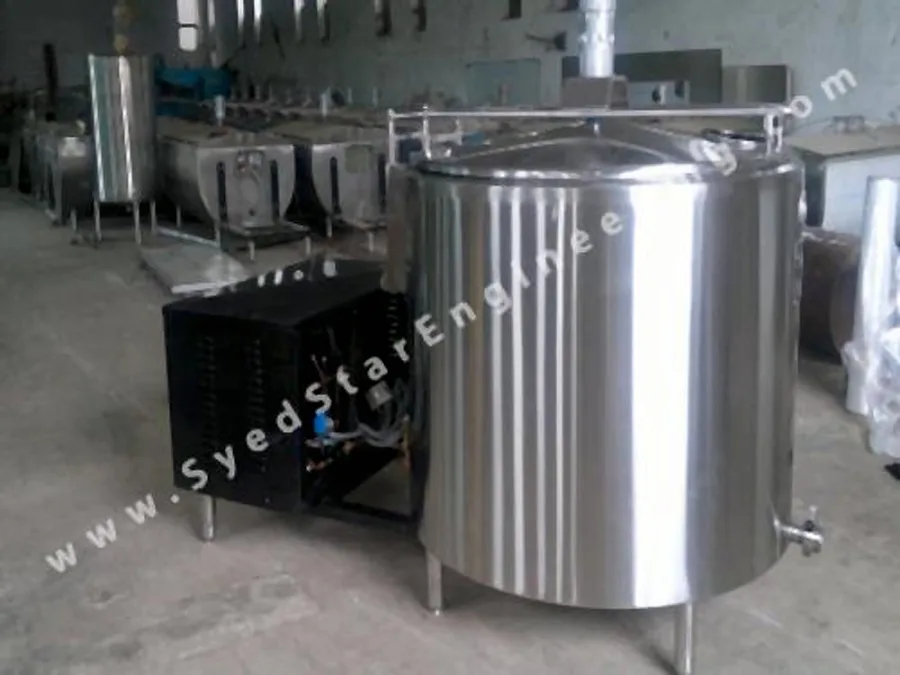
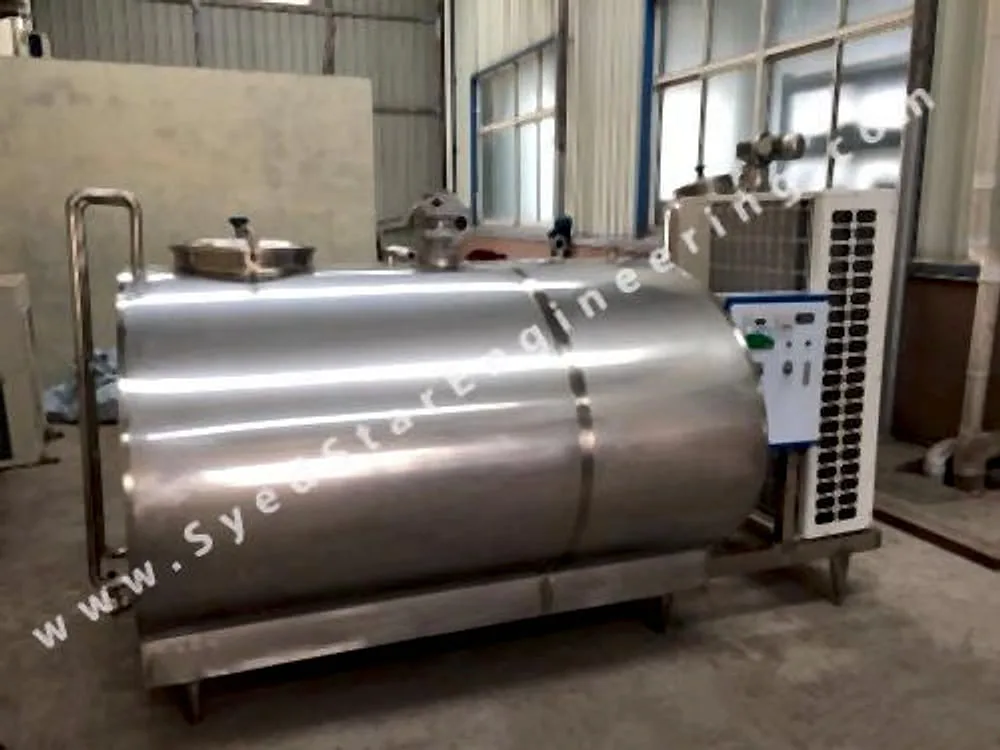
A bulk milk chiller (also called a bulk milk cooler) has a few main parts:
- Insulated stainless steel tank: a double-walled vessel that keeps cold milk cold
- Evaporator: refrigerant circulates through channels on the tank's inner wall and base, drawing heat out of the milk
- Agitator: gently stirs the milk so it cools evenly and the fat doesn't separate
- Condensing unit: the compressor and condenser that reject the heat outside
- Controller and thermostat: start and stop cooling to hold the set temperature
- Outlet valve and lid: for hygienic filling, emptying and cleaning
Direct expansion vs ice bank systems
There are two common ways to cool the milk.
Direct expansion (DX)
Refrigerant evaporates directly in the tank wall. DX chillers are efficient and cool quickly, but they need electricity while cooling.
Ice bank
The refrigeration system builds up a store of ice in a water tank ahead of time. When milk arrives, chilled water from the ice bank cools it. Ice bank systems can build ice when power is available and cool milk later, which is useful where electricity supply is interrupted, although they use more energy overall.
Choose based on your power supply, your milk delivery pattern and the size of the centre.
Pre-cooling with a plate heat exchanger
Many collection centres add a plate heat exchanger (PHE) before the chiller. Incoming warm milk passes one side of the plates while cool water flows on the other, removing a large share of the heat before the milk even enters the tank. This reduces the load on the refrigeration unit and speeds up cooling.
Sizing a chiller for your centre
Tell your supplier:
- Litres collected per day, and the peak season volume
- How milk arrives: once or twice a day, or in several smaller deliveries
- How often the tank is emptied: after every collection, or once a day
- Ambient temperature at the site in summer. The condensing unit must be rated for your hottest days.
- Power supply: single or three-phase, and how reliable it is
Chillers are designed to cool a certain share of their capacity at each milking. Adding too much warm milk at once can raise the temperature of milk that's already cold, so match the chiller to your delivery pattern.
Hygiene: the other half of quality
A cold tank can't fix dirty milk. Good practice includes:
- Clean the tank after every emptying, using suitable detergents and rinsing thoroughly
- Keep lids closed and the area around the chiller clean and dry
- Filter milk as it goes into the tank
- Check and record milk temperature at every delivery
- Service the refrigeration unit regularly, and keep condenser fins clean so it can reject heat efficiently in summer
From collection to the dairy
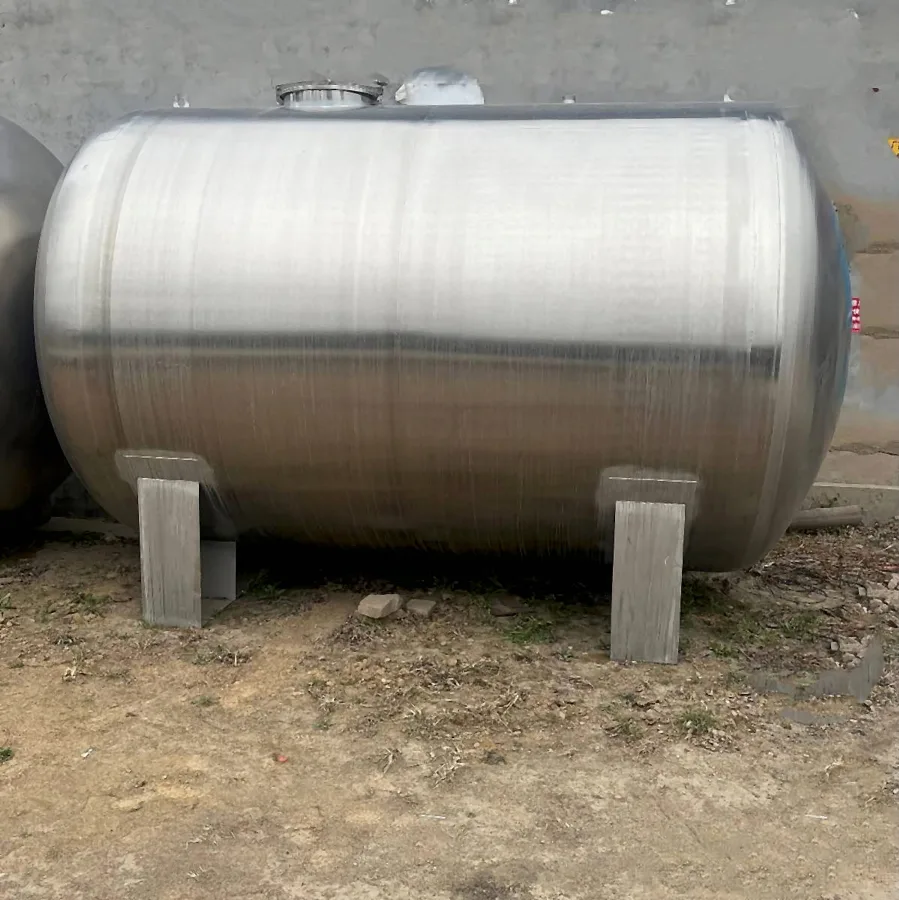
Cooled milk should stay cold all the way to the processing plant. Insulated milk transportation tanks keep the temperature from rising on the road, and clean stainless steel storage tanks at the dairy hold it until processing.
Get cooling right at the start of the chain, and every step after it becomes easier.